Pepperdine Caruso Law Receives 2026 Excellence in Innovation Law Schools Award from Insight Into Academia
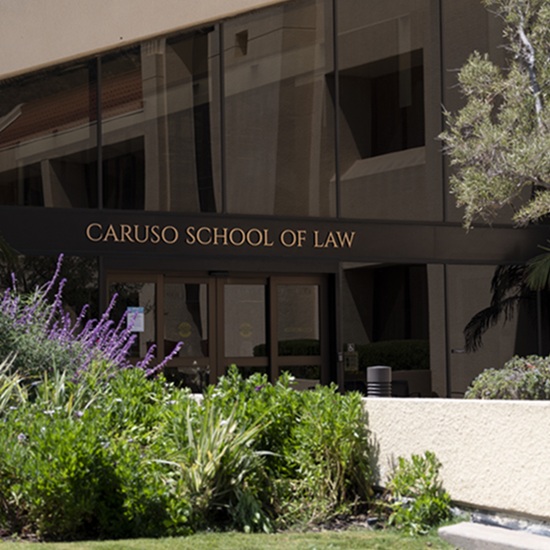
Pepperdine Caruso Law has received the 2026 Excellence in Innovation: Law Schools Award from Insight Into Academia magazine. The magazine is the nation’s longest-running publication advancing best practices in higher education. Pepperdine Caruso Law will be featured in the July/August 2026 Insight Into Academia issue.
The national honor celebrates law schools that are redefining the future of legal education through transformative programs and initiatives that advance curriculum, experiential learning, technology and AI integration, access to legal education, professional pathways, and more, to serve the evolving needs of students better and meet the changing demands of today's workforce.
"Artificial intelligence is transforming the legal profession at an extraordinary pace," said dean Paul L. Caron. "Law schools have a responsibility to ensure graduates understand not only how to use these emerging technologies, but how to do so with sound judgment, integrity, and a commitment to serving clients well. P(AI)R for Lawyering reflects Pepperdine's commitment to preparing students to lead responsibly in a profession being transformed by AI."
Pepperdine Caruso Law was recognized for its Pepperdine AI Readiness (P(AI)R) for Lawyering initiative, a law school-wide effort designed to prepare students for a profession increasingly shaped by artificial intelligence. The initiative's name reflects its central goal: pairing practical AI fluency with the values and judgment required for responsible lawyering. Through a practical skills AI credential, hands-on workshops, and a values-based framework for responsible AI use, P(AI)R helps students develop practical AI fluency while strengthening the ethical judgment, critical thinking, and professional responsibility essential to legal practice.
Developed through input from students, faculty, staff, alumni, and employers, the initiative is designed to address both the opportunities and challenges AI presents for legal education and the legal profession. A distinguishing feature of P(AI)R for Lawyering is its "compass approach," which guides AI-related initiatives through four core principles: ethics, justice, compassion, and accuracy.
"P(AI)R for Lawyering was created to help our community engage thoughtfully with the opportunities and challenges presented by artificial intelligence," said Naomi Goodno, dean of students and AI innovation. "By bringing together students, faculty, staff, alumni, and employers, we are building a framework that helps future lawyers develop practical AI fluency while strengthening—not replacing—the critical thinking, ethical judgment, and professional responsibility that remain essential to the practice of law."
“The Insight Into Academia Excellence in Innovation: Law Schools distinction is a prestigious national honor recognizing law schools driving innovation in legal education,” said Holly Mendelson, co-owner and publisher of Insight Into Academia magazine. “This selective award celebrates programs defined by forward-thinking design and measurable impact—initiatives that raise the standard and advance the field.”
SUBSCRIBE TO THE WAVELENGTH
Pepperdine Newsroom's official newsletter for campus updates and top news.
Subscribe